Amy Kern/ Exhibición-Exhibition/Viernes 14 de Septiembre en Residencia Corazón

Pasar los últimos meses viajando y estudiando artesanía tradicional en Sudamérica me inspiró para esta serie de esculturas. Cada una fue hecha a través de un compromiso intenso con los materiales disponibles y técnicas simples, junto a una preocupación por el significado del contenido. Los temas explorados incluyen la destrucción inherente a la mercantilización de la naturaleza -minando la Tierra al punto de hacerla colapsar- la híper industrialización y el deterioro de los paisajes. Las trampas de las lustrosas pero superficiales fachadas del “progreso” muchas veces van en detrimento de una relación más armoniosa entre el ser humano y la Tierra. El interés por estos temas aumentó con mi experiencia en zonas relativamente no tocadas por el ser humano en Sudamérica, yuxtapuestas con las obvias presiones invasivas del crecimiento tecnológico y la urbanización. Este es un continente muy hermoso que debería ser celebrado y apreciado.


Spending the last few months traveling and studying traditional hand crafts in South America has inspired the ideas for this series of sculptures. Each were realized through intense engagement with available and simple materials and techniques along with a concern for meaningful content. Topics explored include the destruction inherent in the commodification of nature, mining the Earth to the point of collapse, and over industrialization and it's displacement of landscapes. The trappings of gleaming but superficial facades of "progress" are often detrimental to a more harmonious relationship man has historically enjoyed with Earth. My interest in these themes was magnified by my experience with some largely untouched regions in South America juxtaposed by the obviously encroaching pressures of rapid technological growth and urbanization. This is a most beautiful continent that should be celebrated and cherished.

AMY KERN


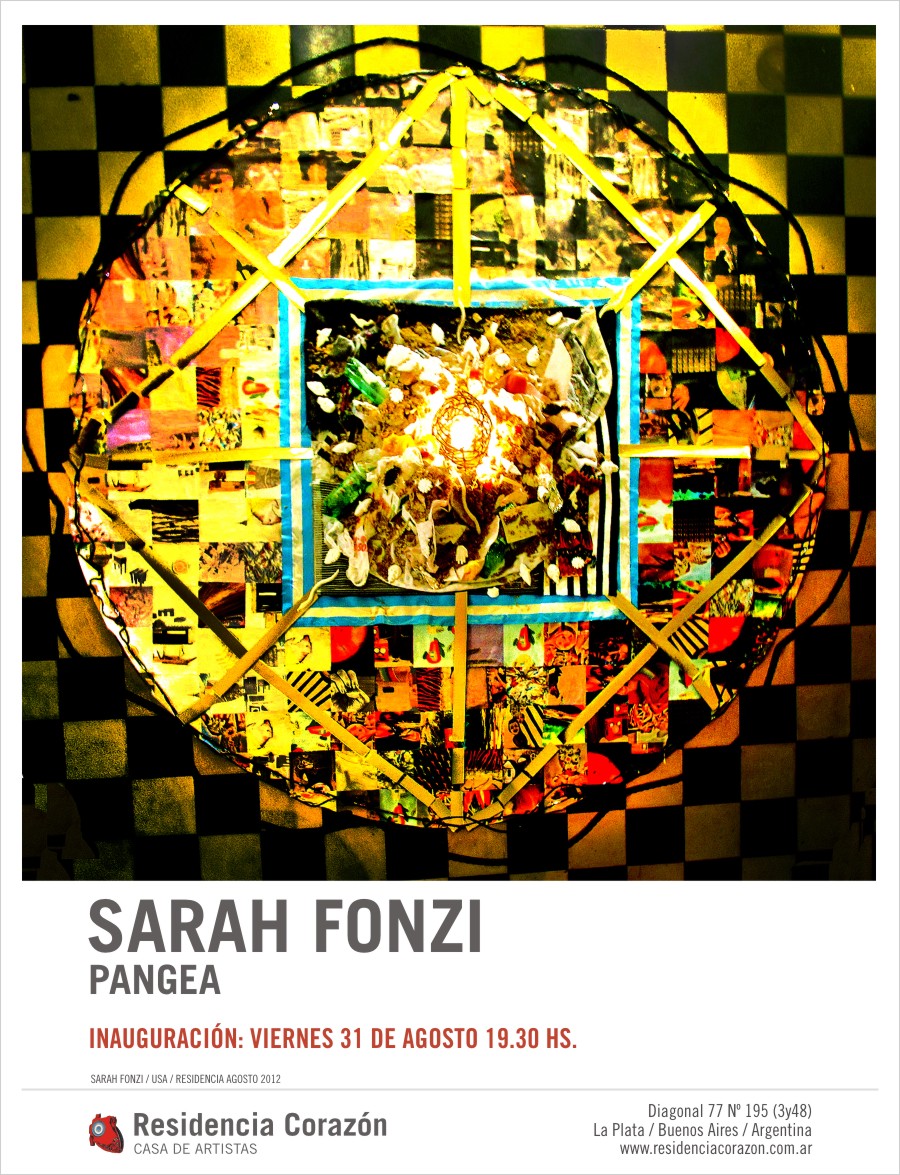
Sarah Fonzi/ PANGEA/ Exhibición 31 de agosto en Residencia Corazón


El plano de La Plata es hermoso y está diseñado con detenimiento, probablemente es sólo apreciado por los extranjeros mirando sus líneas y sus diagonales en un mapa. Las calles se extienden como una telaraña y forman bloques aparentemente perfectos. Sin embargo, no lo son. Tienen muchas grietas, imperfecciones, senderos dentro de senderos, montículos, descomposición y malezas. Cada grieta marca la ciudad con un registro de dónde y cuándo sucedió algo.

La vida es un conjunto complicado de acciones. Estamos atados a este mundo por lo que hacemos y lo que no hacemos. Nos hagamos cargo o no de nuestras acciones, éstas dan forma al medio ambiente en que vivimos. Desde lo más superfluo hasta lo más serio, estas cosas conectan nuestras vidas como una red.
Mi proceso combina la contemplación con la acción. Muchos de mis materiales y proyectos llevan horas de movimiento repetitivo. Cuidadosamente, diseño la habilidad en mis herramientas y desarrollo sistemas para construir en forma masiva un objeto. El largo proceso se convierte en un homenaje al paso del tiempo y la devoción de mi oficio. Mis esculturas toman vida, comenzando una colección de materiales, ya sea desechos, textiles, o cabello. Maduran y se transforman en objetos devocionales que a veces incluyen un vestigio de mi propia religión personal.
El encaje me parece material ideal para esta exploración. Es testigo de la evolución social y cultural y su diseño requiere que cada hilo interactúe para completar un patrón. La vida es un conjunto de patrones, millones de patrones, con hilos en común en diferentes intersecciones.
La araña recorre largas distancias haciendo su tela para conectar las mismas cosas en diferentes lugares.
-----------------------------------------------------------------------------
The pattern of La Plata is beautiful and carefully designed, probably only appreciated by outsiders gazing upon its lines and diagonals from a map. The streets spread out like a spider’s web and form perfect little blocks, however, these blocks are not quite perfect. They have many cracks, imperfections, paths within paths, piles, decomposition and growth. Each crack marks the city with a record of where and when something happened.
Life is a complicated arrangement of actions. We are tied to this world by what we do and don’t do. Whether or not we take credit for our actions they shape the environment we live in. From the mundane to the severe these things connect our lives like a web.
My process often combines contemplation with action. Many of my materials and projects involve hours of repetitive movement. Carefully, I design the skill into my tools and develop systems for building in order to mass produce an object. The long process becomes an homage to time passed and devotion of my craft. My sculptures take on lives, beginning with the collection of materials whether it be garbage, textiles, or hair. They mature into devotional objects sometimes even including a relic of my own personal religion.
I find lace to be the perfect material for this exploration. It is a witness to social and cultural evolution and its design requires every single thread to interact accordingly to complete the pattern. Life is an arrangement of patterns, millions of patterns, with common threads in different intersections.
The spider spins her web great distances to connect all the same things in different places.


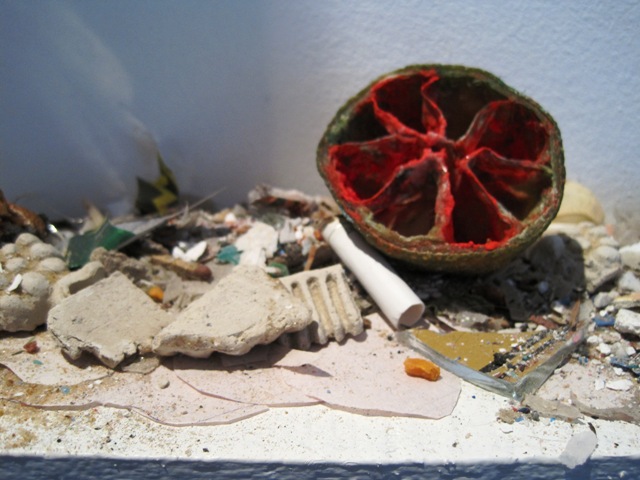
Las líneas de Argentina/ Sophia Kaschowitz/ Muestra en Residencia Corazón/Sábado 28 de julio


“The lines of Argentina"
The Line is the basic of all kind of art. The line is the oldest and most traditional art instrument. But in this exhibition I put the classical line in a new context of contemporary art. In form of Installations, Videos, Photos, Conceptual Art and Performance the classical graphic line is transforming from a simple 2 dimensional drawing into a 3 dimensional moving sculpture and is beginning to create and to deform room. I liberate the line from colors and given forms in order to let it speak by itself. The line is becoming abstract, but concrete and tangible at the same time. I put the line into different materials to show my various impressions of Argentina that I am sketching. In form of drawing contours, moving shadows, hanging rough tree branches, cables, brilliant video and cassette tapes, they become substantial and lively; they are breaking and creating space, are playing with the room, are echoing, reflecting, flying, floating, swimming, disappearing and reemerging in a pale shadow of our fantasy - like floating memories and impressions of that amazing country. The line is still related into everyday life and it refers to our natural surrounding, but it is perceived in a new esthetic and sensitive way. A single and pure line can express so much power, thoughts and sensuality; it captures a whole character and feeling.
“The lines of Argentina” are making a contemporary drawing into Argentina Space.

"Las líneas de Argentina"
La Línea es la forma básica de arte. Es el instrumento de arte más viejo y tradicional. Pero en esta muestra pongo la línea clásica en un nuevo contexto de arte contemporáneo. En la forma de Instalaciones, Videos, Fotos, Arte conceptual y Performance, la línea clásica gráfica se transforma de un dibujo simple de 2 dimensiones en una escultura móvil de 3 dimensiones y está empezando a crear y deformar espacio. La libero de colores y formas dadas para dejarla hablar por sí misma. La línea se vuelve abstracta, pero concreta y tangible al mismo tiempo. La coloco en diferentes materiales para mostrar mis diversas impresiones de Argentina. En la forma de dibujo de contornos, sombras que se mueven, ramas de árboles que cuelgan, cables, cassettes y videos brillantes, se vuelven sustanciosas y vivas; rompen y crean espacio, juegan con el cuarto, hacen eco, reflejan, vuelan, flotan, nadan, desaparecen y reemergen en una sombra pálida de nuestra fantasía- como memorias que flotan e impresiones de aquel país increíble. La línea todavía se relaciona con la vida cotidiana y se refiere a nuestro entorno natural, pero se percibe de una forma estética nueva y sensible. Una línea única y pura puede expresar tanto poder, pensamientos y sensualidad, que captura todo un carácter y un sentimiento.
“Las líneas de Argentina” realizan un  dibujo contemporáneo en el Espacio Argentino.

TALLER DE CONSTRUCCIÓN DE PROYECTO EXPOSITIVA PARA FOTÓGRAFOS EN RESIDENCIA CORAZÓN/27 DE JULIO


Encuentro grupal para ver, entender, debatir, elegir, ordenar y producir la forma.

Revisión de portfolio - Ejercicios curatoriales - Concepto de montaje y puesta - Criterios de selección de obra

VIERNES 27 DE JULIO de 19 a 21 en RESIDENCIA CORAZON (La Plata)

* Se sugiere a los inscriptos enviar parte del material con el que se trabajará o bien un punteo sobre la búsqueda y el objetivo a cumplir con este taller

COORDINA: Romina Resuche

Retribución: $150

INFORMES E INSCRIPCION: rominaresuche@gmail.com


Andrew Dines/ Desconectado / Residencia Corazón/ Junio


Disconnected

How do we define our sense of place? Our home? How do we connect to the people around us? What draws us to one place over another? Where do we derive a sense of belonging? What makes us feel disconnected, distanced, or isolated in certain environments? My work in La Plata can be seen as an reflection of my relationship with Argentina. I arrived to the city with vague notions of a project exploring the role and experience of “outsiders” in Argentina. Standing in front of the canvas, my work became much more personal and introspective. I have been living and working in Argentina seasonally for several years. I feel myself drawn to the place, yet I still feel as much an outsider as ever. After so much time here, I recognize that I have only begun to scratch the surface of the culture and unravel the mystery of the people and their language. This duality of attraction and belonging is manifested in images of curiosity, exploration, observation, estrangement, relationship, and disconnectedness. These are the themes that I have explored here.

Desconectado
¿Cómo definimos nuestro sentido de lugar? ¿De cuál es nuestro hogar? ¿Cómo nos conectamos con la gente a nuestro alrededor? ¿Qué nos acerca a un lugar más que a otro? ¿De dónde proviene nuestro sentido de pertenencia? ¿Qué nos hace sentir desconectados, distanciados o aislados en ciertos entornos? Mi trabajo en La Plata puede ser visto como una reflexión sobre mi relación con Argentina. Llegué a esta ciudad con nociones vagas de un proyecto que explorara el rol y la experiencia de los “de afuera” en Argentina. Parado frente al lienzo, mi trabajo se volvió mucho más personal e introspectivo. He estado viviendo y trabajando en Argentina en forma temporaria por varios años. Me siento atraído por este lugar, sin embargo, me sigo sintiendo “de afuera”. Después de tanto tiempo aquí, reconozco que solamente he empezado a rascar la superficie de la cultura y a desentrañar el misterio de la gente y la lengua. Esta dualidad de atracción y pertenencia se manifiesta en imágenes de curiosidad, exploración, observación, extrañamiento, relación y desconexión. Estos son los temas que he investigado aquí.

andrewdines.com